
Multi-Unit Blocks
One building, many tenancies, shared everything. The building is the asset; the units are what earn. Domicium models both, so a generator serving twelve flats is not filed against one of them.
Owners and managers of blocks, compounds and gated schemes.
What makes this hard
Shared costs have to be shared
A borehole pump, a generator and a security contract serve the block. Charging them to whichever unit reported the fault is how the numbers stop meaning anything.
Occupancy is the number that matters
Two empty units in a block of twelve is a 17% hole, and it is invisible if you are tracking tenancies rather than units.
What Domicium does about it
Buildings, units and assets, modelled separately
A property holds buildings, buildings hold units, and an asset like a generator belongs to the building rather than to a flat.
Facilities & MaintenanceOccupancy across the block
Vacant, occupied and notice-given per unit, rolled up to the building and the portfolio.
Receivables & ArrearsPlanned upkeep against the asset
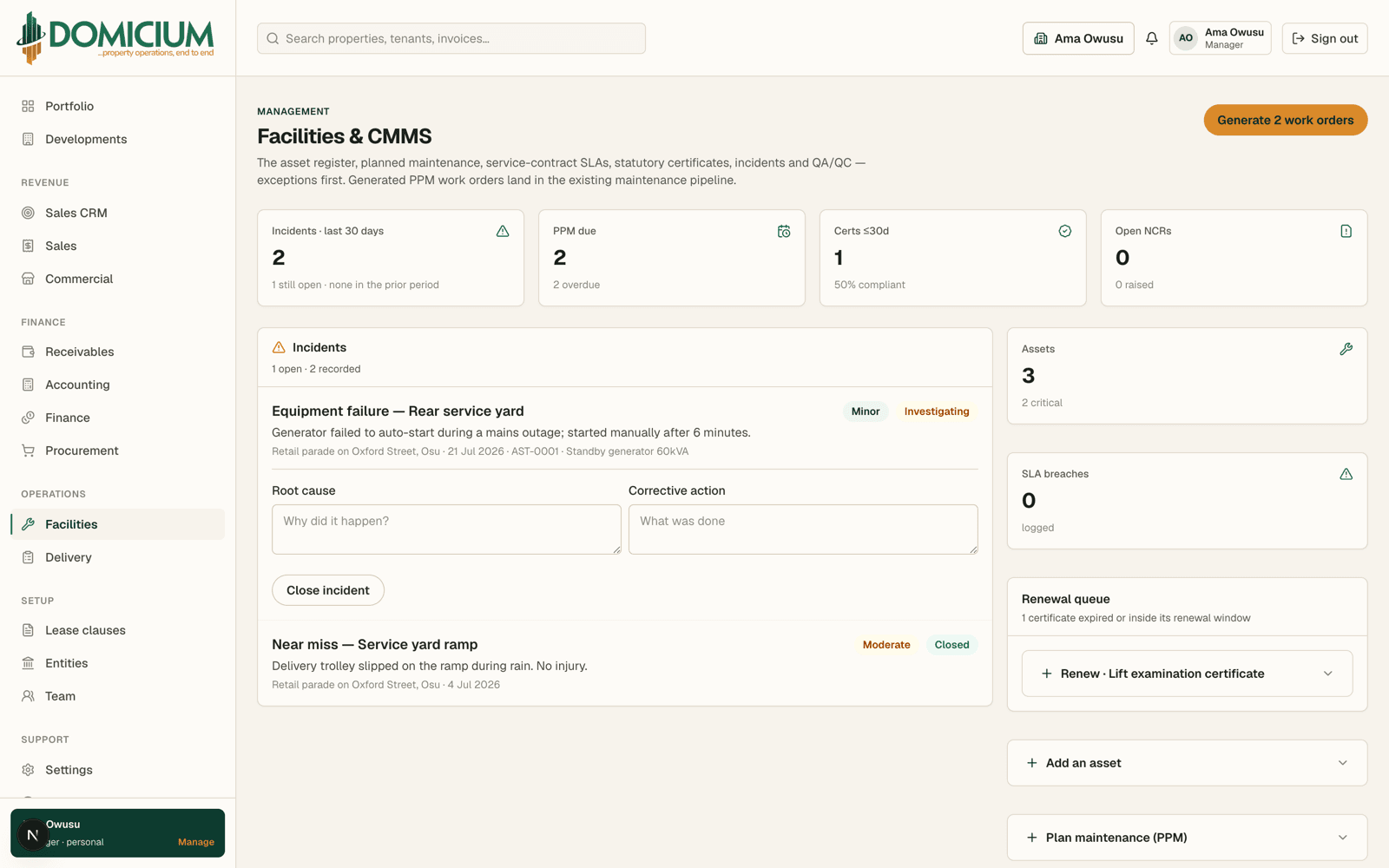
Servicing schedules attached to the plant itself, so the generator gets serviced whether or not anyone complains.
Facilities & Maintenance
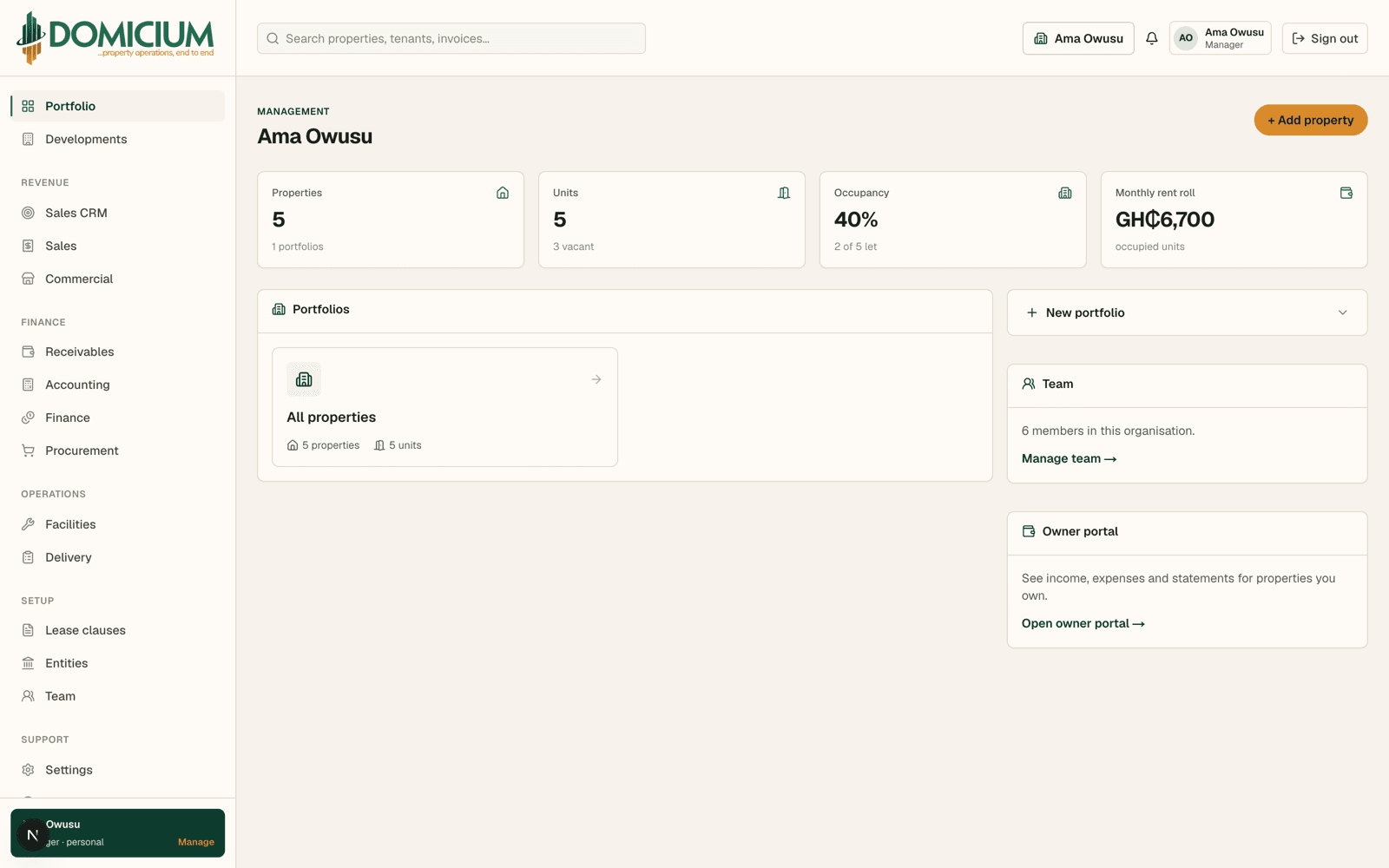
The screens you would live in
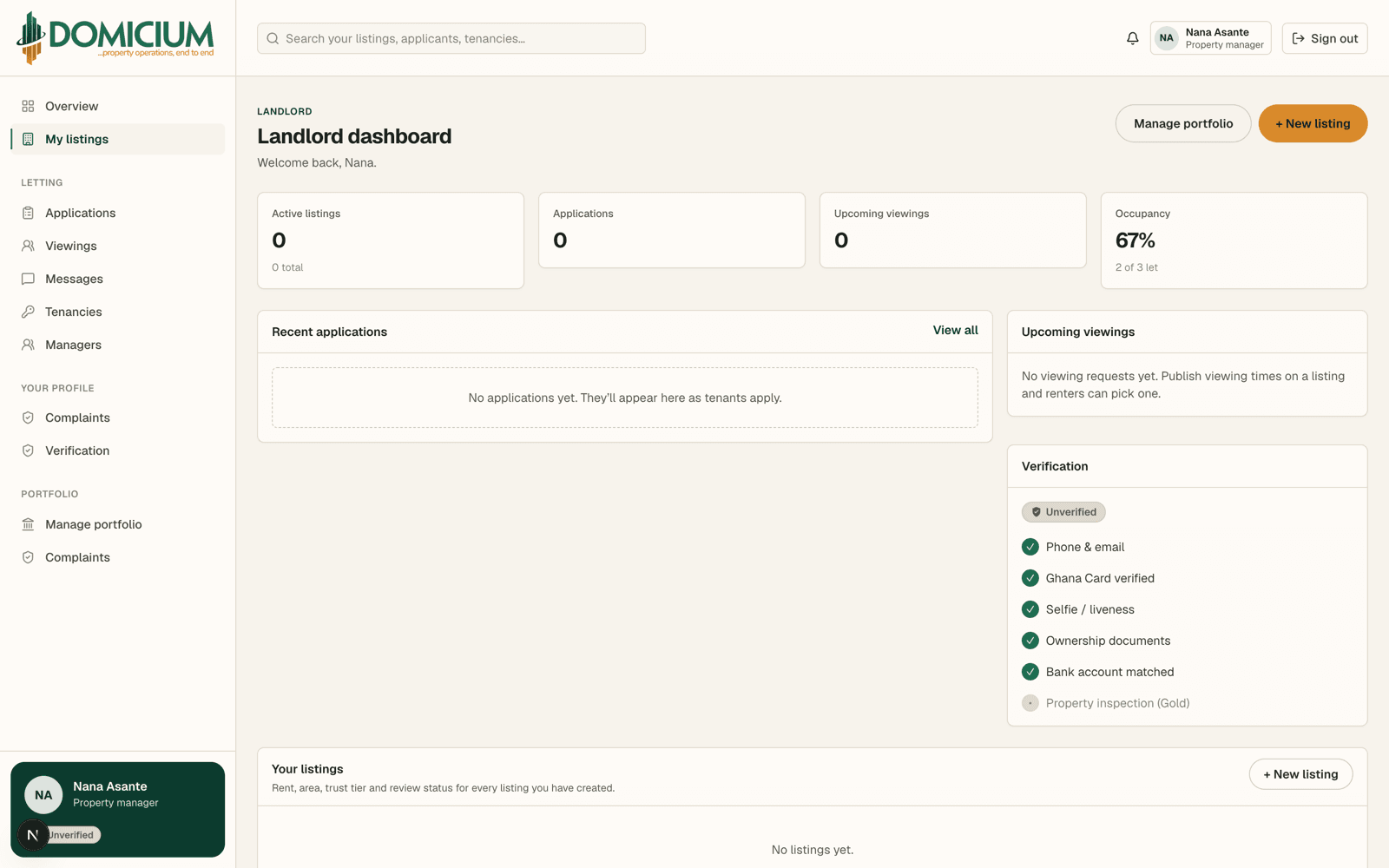
Captured from the running product, not drawn. Every figure came out of the database through the same code a customer uses.
What it does not do for multi-unit blocks yet
- Apportioning a shared cost across residential units automatically is only built for commercial CAM — on a residential block it is posted manually.
- Meter-based service schedules fire once and then go dormant; there is no screen for logging a new reading.
Run multi-unit blocks on Domicium
Start with one property and the ledger behind it. Nothing here needs a migration project to be useful in week one.