
Mixed-Use Properties
Common on every main road in Accra: retail at street level, homes above. The two halves are billed differently, taxed differently and protected differently, in the same building.
Owners of buildings with both commercial and residential space.
What makes this hard
Two different lease regimes
The shop pays service charge and is negotiated business to business. The flat above has statutory protections the shop does not.
Tax differs by tenancy, not by building
VAT and withholding treatment follows what is being let, so one building can produce two different tax positions.
What Domicium does about it
Commercial and residential leases side by side
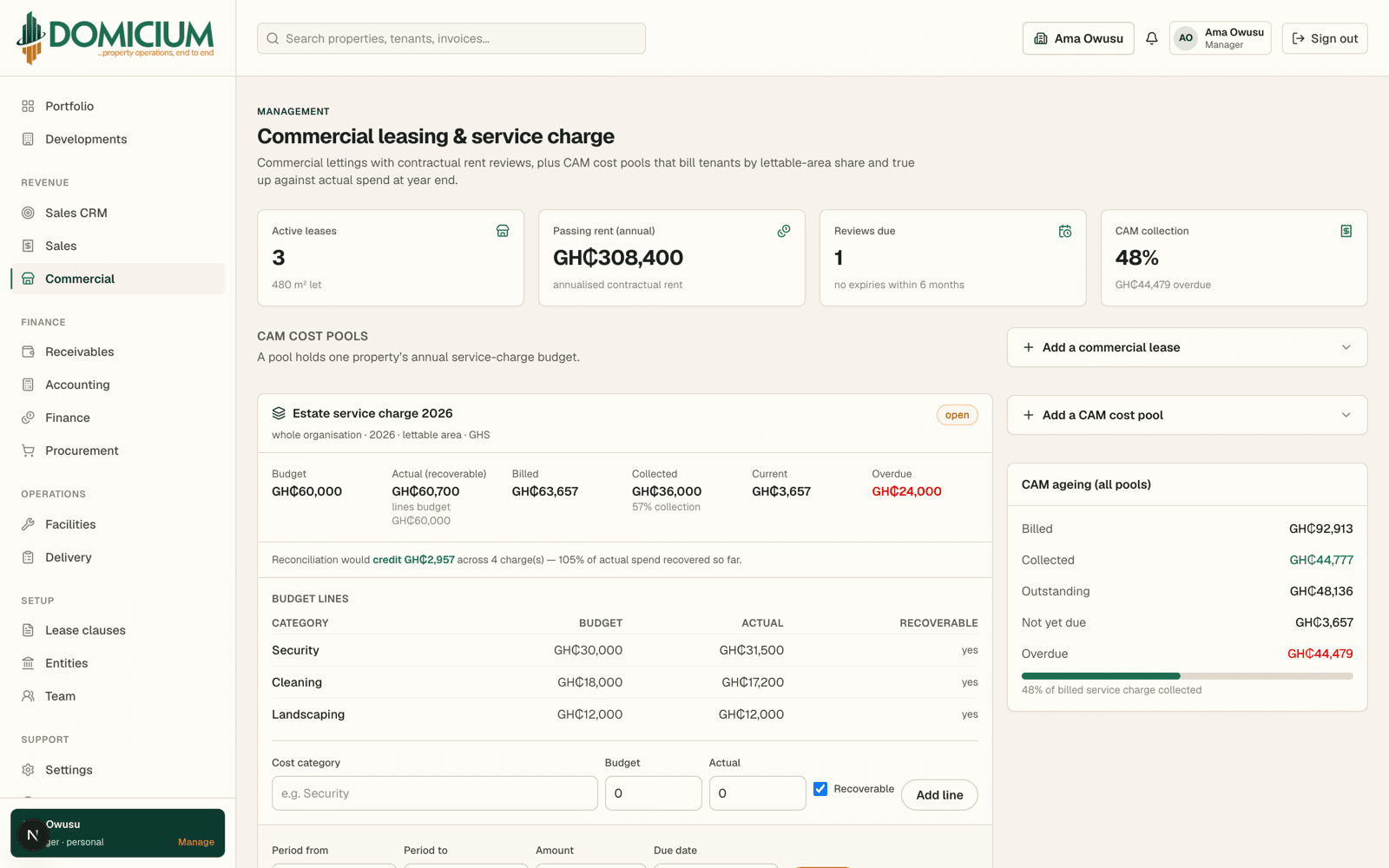
Each unit carries its own lease type, so the shop gets service-charge apportionment and the flat gets a Ghanaian residential tenancy.
Commercial Leasing & CAMRent-advance flagging where it applies
The advance limit is a residential protection and is flagged only on residential and student units. Flagging every shop would produce a warning nobody reads.
Leases & TenanciesVAT and withholding applied at source
Computed per charge rather than per building, so the two halves are treated correctly without splitting the property in two.
Ghana VAT & Withholding
The screens you would live in
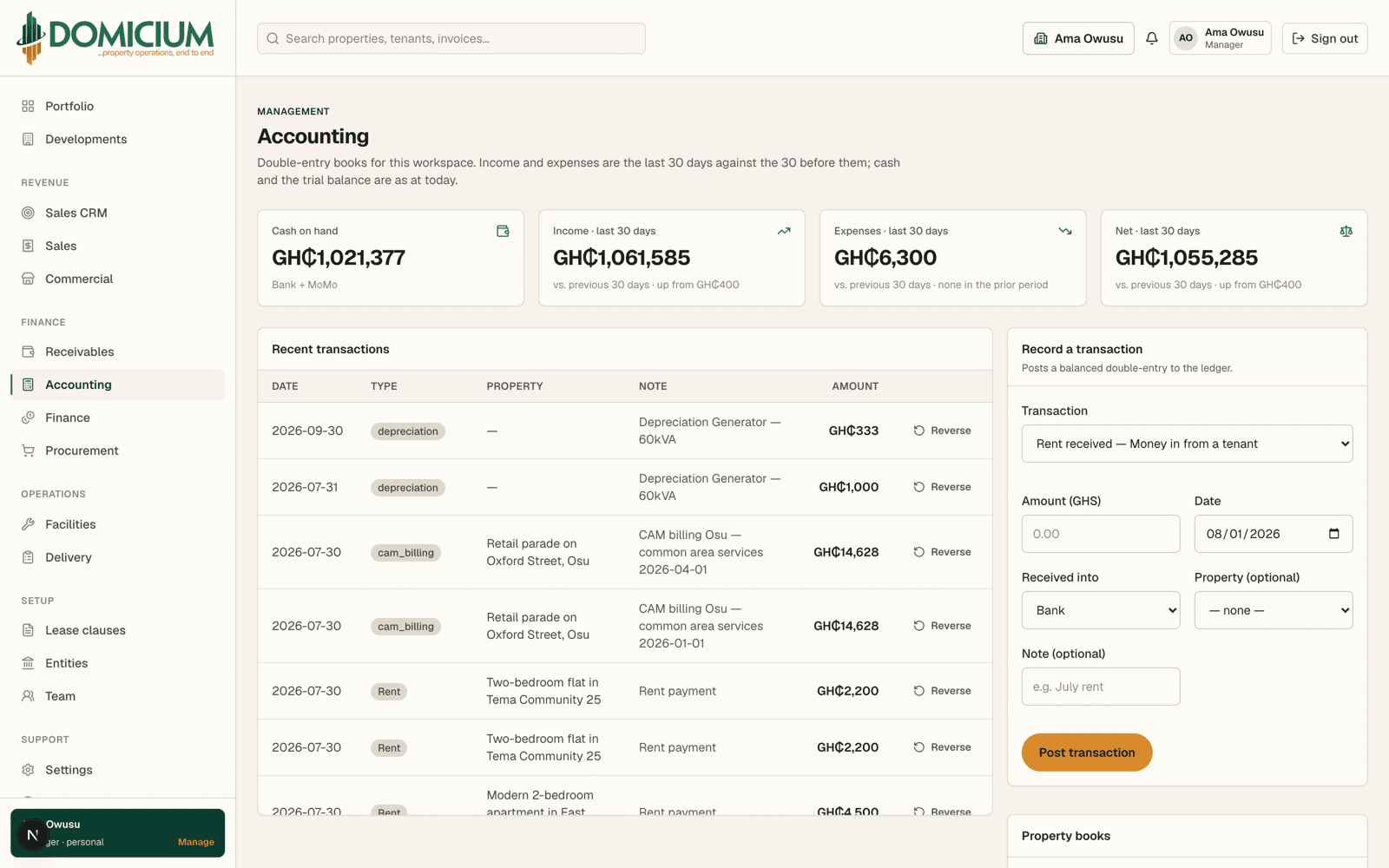
Captured from the running product, not drawn. Every figure came out of the database through the same code a customer uses.
What it does not do for mixed-use properties yet
- A single tenant taking both a shop and a flat has two separate tenancies rather than one combined account.
Run mixed-use properties on Domicium
Start with one property and the ledger behind it. Nothing here needs a migration project to be useful in week one.
Also relevant