
Enterprise Operations
When the operation is bigger than one company: several owning entities, separate books, shared staff, and a need to see across all of it without merging any of it.
Management firms running property for multiple owning entities.
What makes this hard
Separate books, one team
Each owning company needs its own set of accounts, but the same people work across all of them.
Who can see what
An accountant on one entity should not be reading another's ledger, and hiding a menu item is not access control.
Procurement runs through the middle
One purchase order can serve several properties across several entities, and it still has to reconcile.
What Domicium does about it
Companies, departments and cost centres
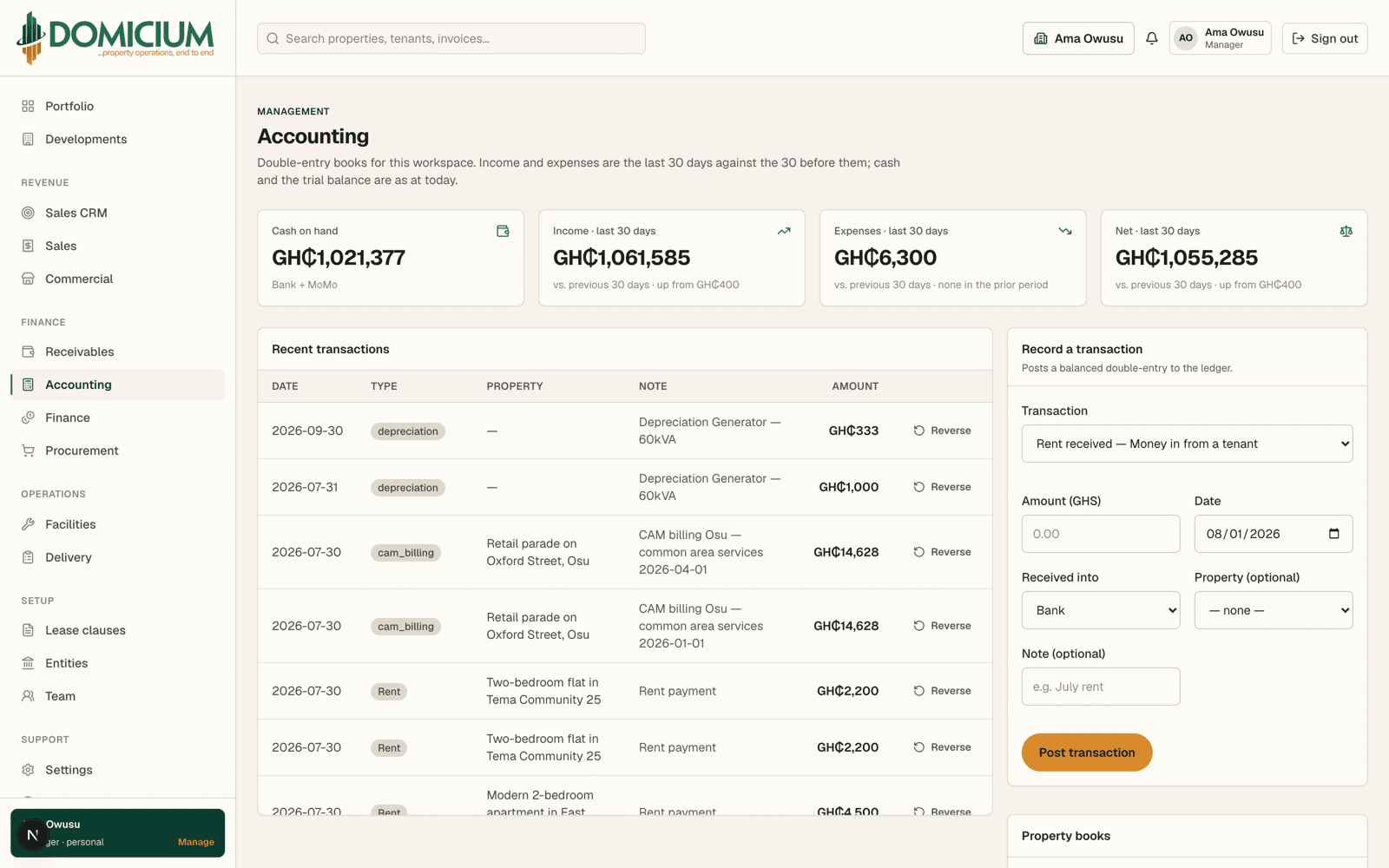
Postings carry their entity, so reporting by company is a filter rather than an export and a merge.
Role and permission per organisation
Each organisation has its own members and its own set of permissions, and every record checks them before it is handed over — not just the menus.
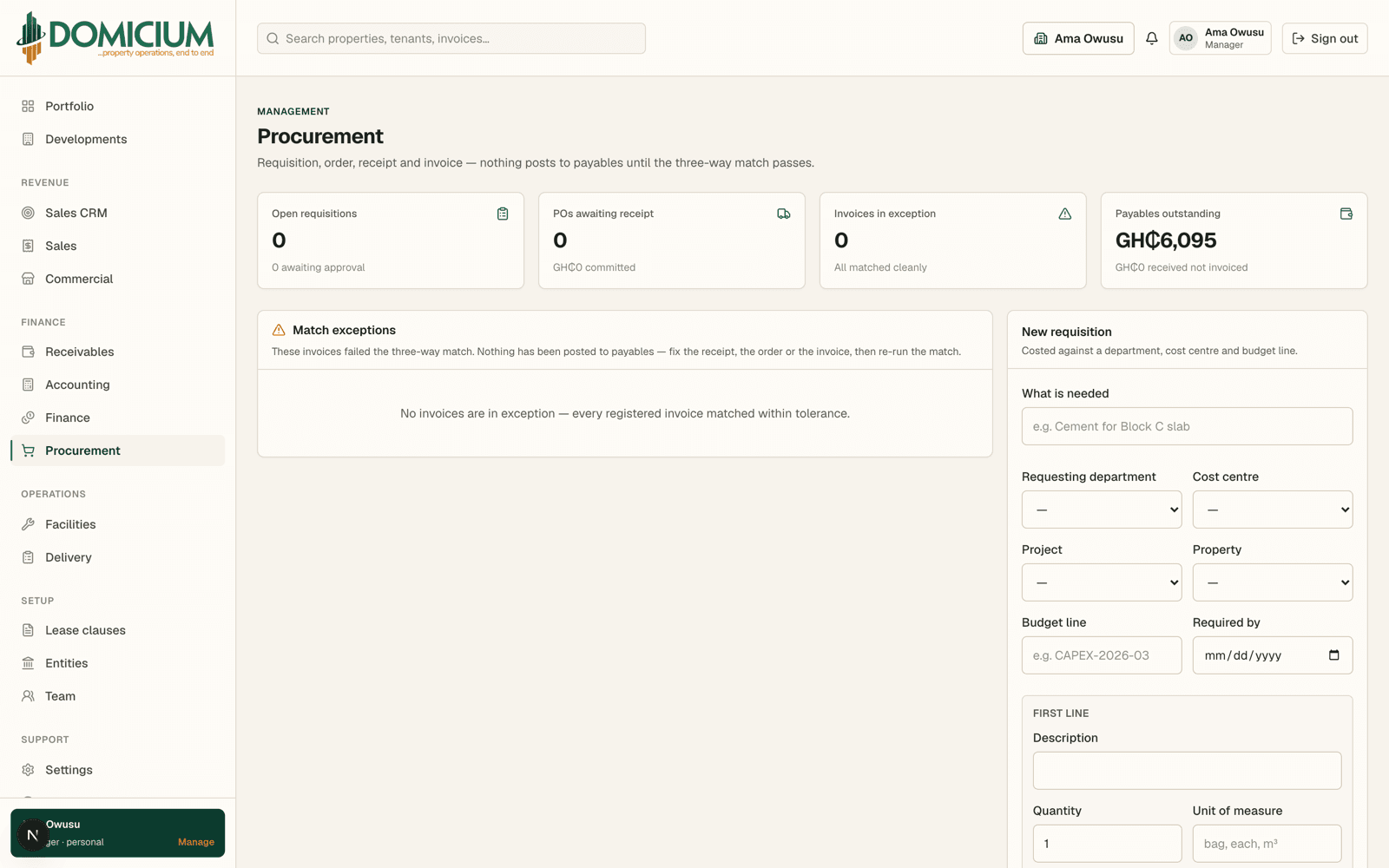
Requisition to purchase order to three-way match
The purchase order, the goods received and the invoice have to agree before anything pays.
An audit log nobody can edit
Append-only, with the actor on every row. It is the record you hand an auditor.
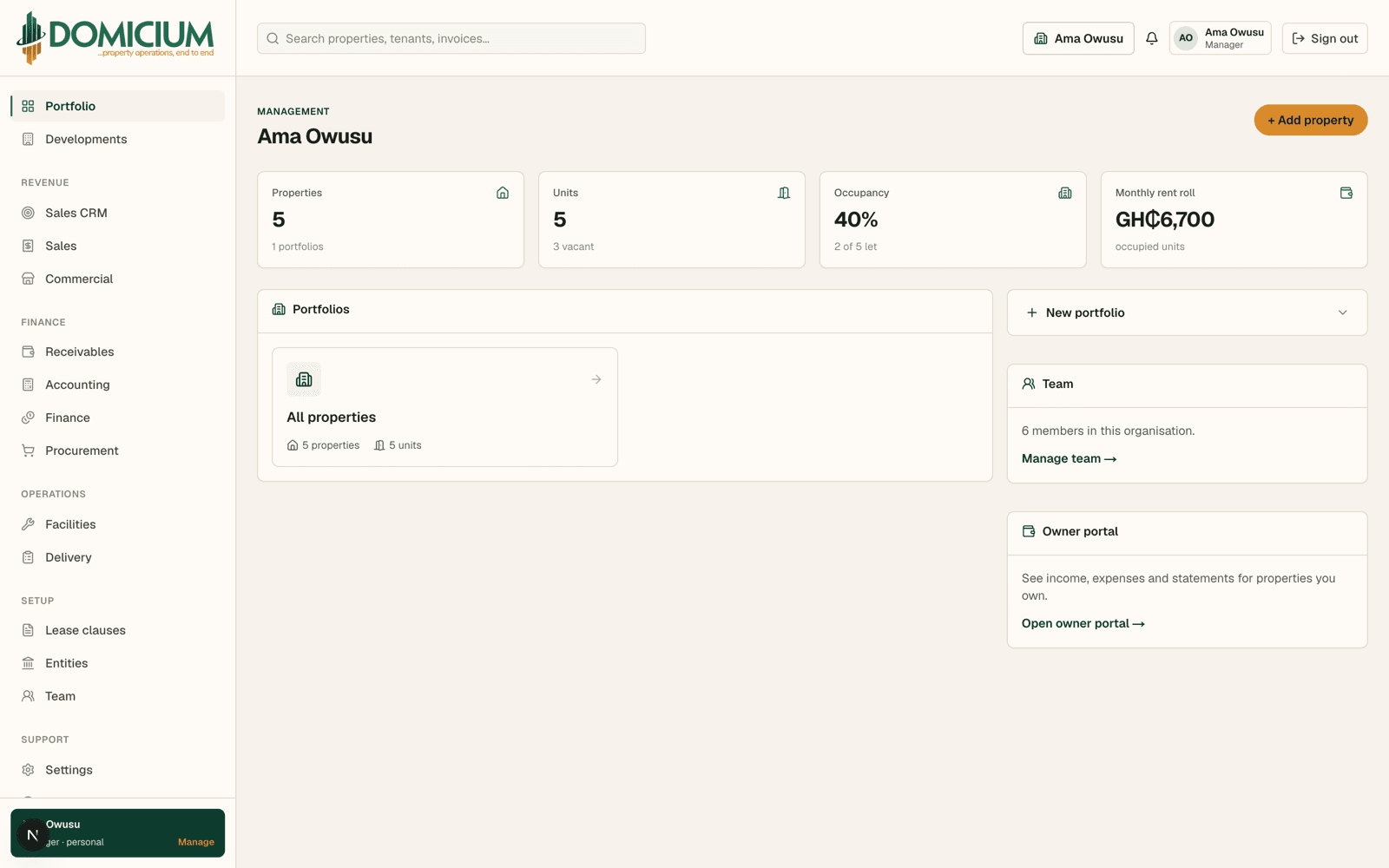
The screens you would live in
Captured from the running product, not drawn. Every figure came out of the database through the same code a customer uses.
What it does not do for enterprise operations yet
- No consolidated group reporting across entities — each company reports on its own.
- No single sign-on for staff accounts.
Run enterprise operations on Domicium
Start with one property and the ledger behind it. Nothing here needs a migration project to be useful in week one.
Also relevant